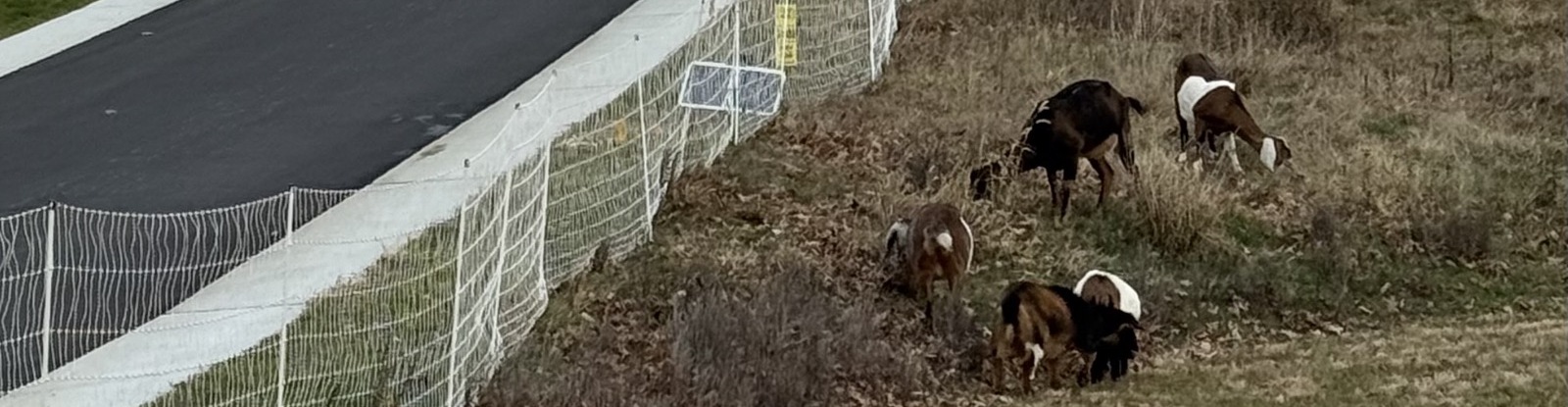
While every site is different, most clients come to us for the same reason: they need a practical way to reduce brush, suppress invasive growth, improve access, or manage terrain that is not well suited to conventional approaches. Our work is tailored to the site, the vegetation, and the goals of the property.
We work with homeowners and residential communities that need help managing overgrown property edges, brushy slopes, poison ivy, invasive vines, fence lines, and hard-to-reach backyard areas. Goat grazing can be a strong fit where heavy equipment is not practical, where a lower-impact approach is preferred, or where the site needs a first pass before additional cleanup or restoration work.
Common goals include brush reduction, invasive suppression, improved access, and longer-term property maintenance.
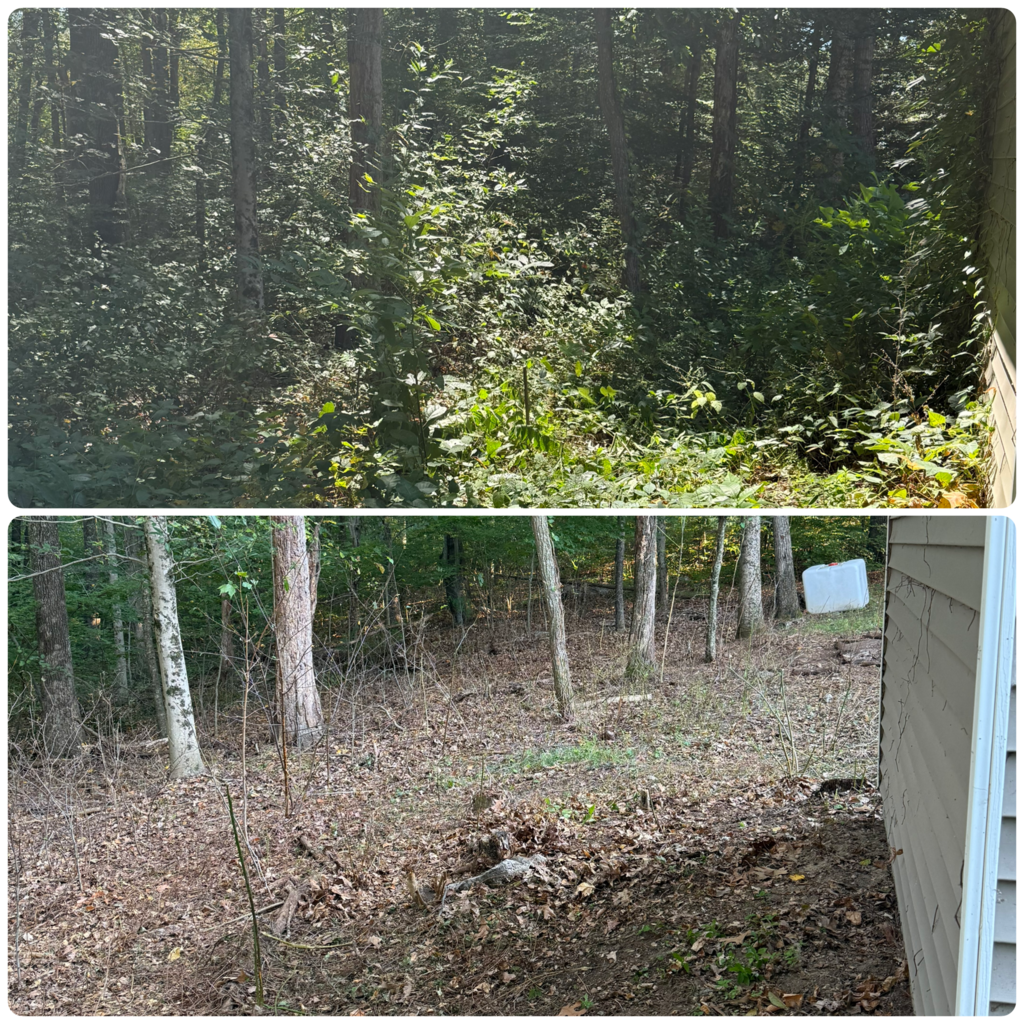
Before & After, Residential Wooded Lot
We support towns, conservation groups, and land trusts working on trail corridors, open space, park edges, invasive suppression, roadside visibility, and stewardship-focused projects. Targeted grazing can help reduce vegetation pressure, improve access, and support longer-term land management goals on public or conservation-oriented sites.
For procurement teams, public-facing projects, or formal review, a municipal information kit is available.
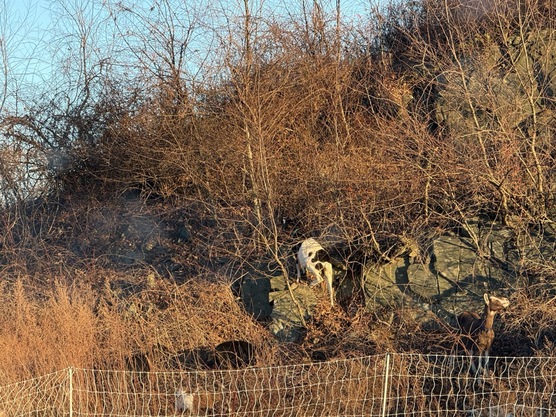
We work with campuses, institutions, and contractor partners that need grazing for difficult terrain, restoration prep, subcontracted vegetation management, or lower-impact land care on larger and more complex sites. These projects often benefit from a site-specific approach and may also include mechanical follow-up, restoration support, or longer-term stewardship options.
A strong fit for larger properties, institutional grounds, restoration projects, and complementary contractor support.
In addition to core goat grazing services, we also support select projects that require different grazing strategies, site conditions, or vegetation goals.
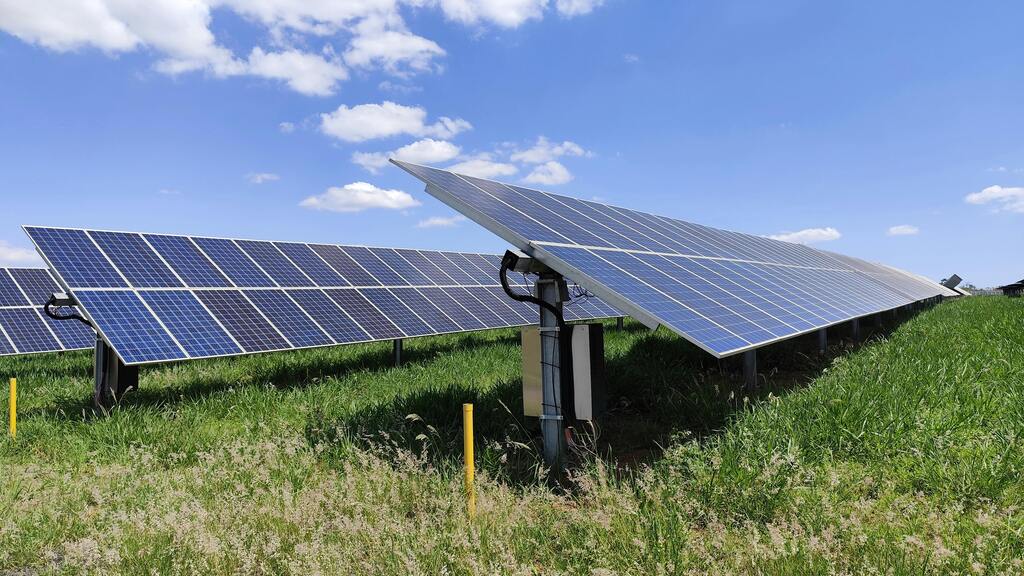
Targeted grazing with sheep for solar sites and related energy landscapes where vegetation control, access, and low-impact maintenance are important to long-term site function.
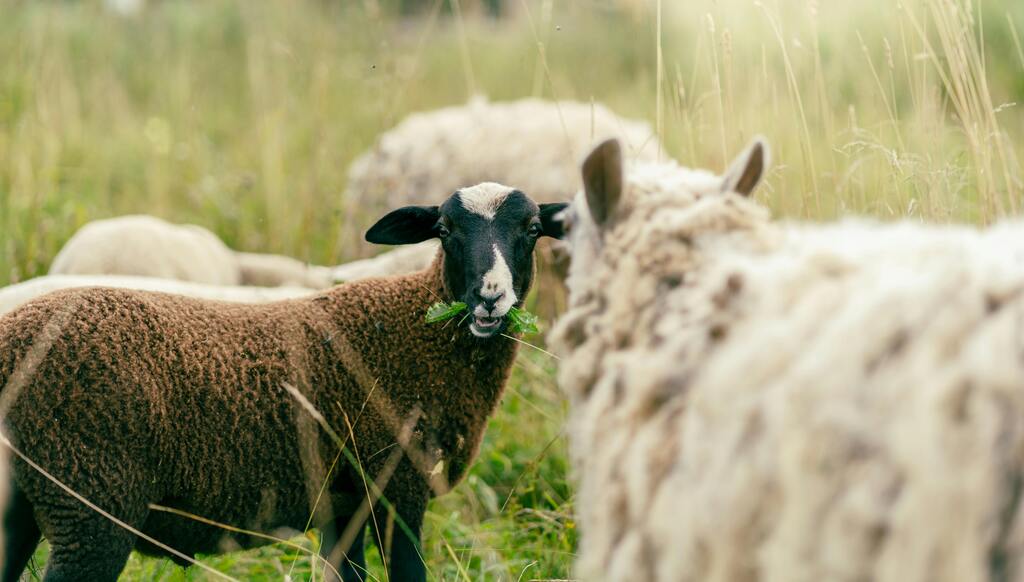
For some projects, sheep may be a better fit for herbaceous vegetation, pasture weeds, and grass-dominant growth where a different grazing pattern is more appropriate than brush-focused goat work.
Availability may depend on project type, timing, and site conditions.
Most projects begin with targeted grazing, and we can recommend the right next step after reviewing your site details, goals, and photos.